What was wrong
The Challenge
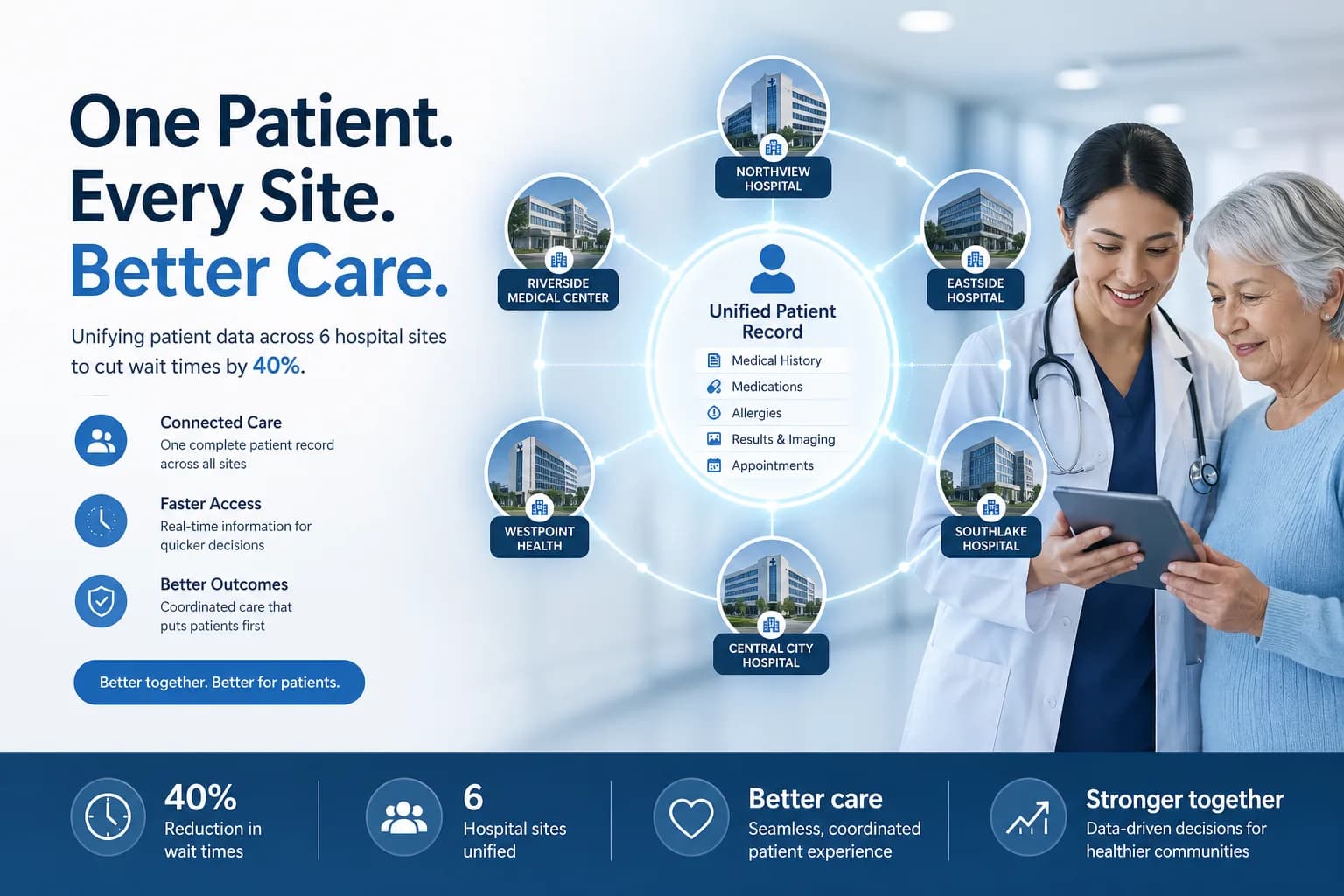
Belief Hospital's rapid acquisition of two regional clinics left them managing three incompatible electronic medical record systems simultaneously. Patient data was fully isolated per site — if a patient transferred from the Aurangabad unit to Pune, doctors had no access to their history, forcing repeated blood panels, imaging scans, and baseline assessments. The direct cost of duplicate diagnostics was estimated at ₹1.2 crore annually, but the human cost — delayed treatment decisions and patient frustration — was far harder to quantify.
Appointment scheduling across all six sites ran on a patchwork of spreadsheets maintained by administrative staff. No centralised view of bed occupancy, theatre availability, or consultant schedules existed. During peak periods, coordination between departments happened over WhatsApp and phone calls. Average in-facility wait time had reached 47 minutes — well above the 20-minute target the hospital had publicly committed to.
Leadership had attempted two prior integrations using off-the-shelf middleware, both of which were abandoned within months due to vendor lock-in and inability to handle the complexity of their HL7 v2 and proprietary formats. Trust in technology projects was low, and clinical staff were resistant to any further disruption to their workflows. The engagement had to be engineered as much around change management as it was around technology.